Refugio en la Montaña
 21 photos
About the Project
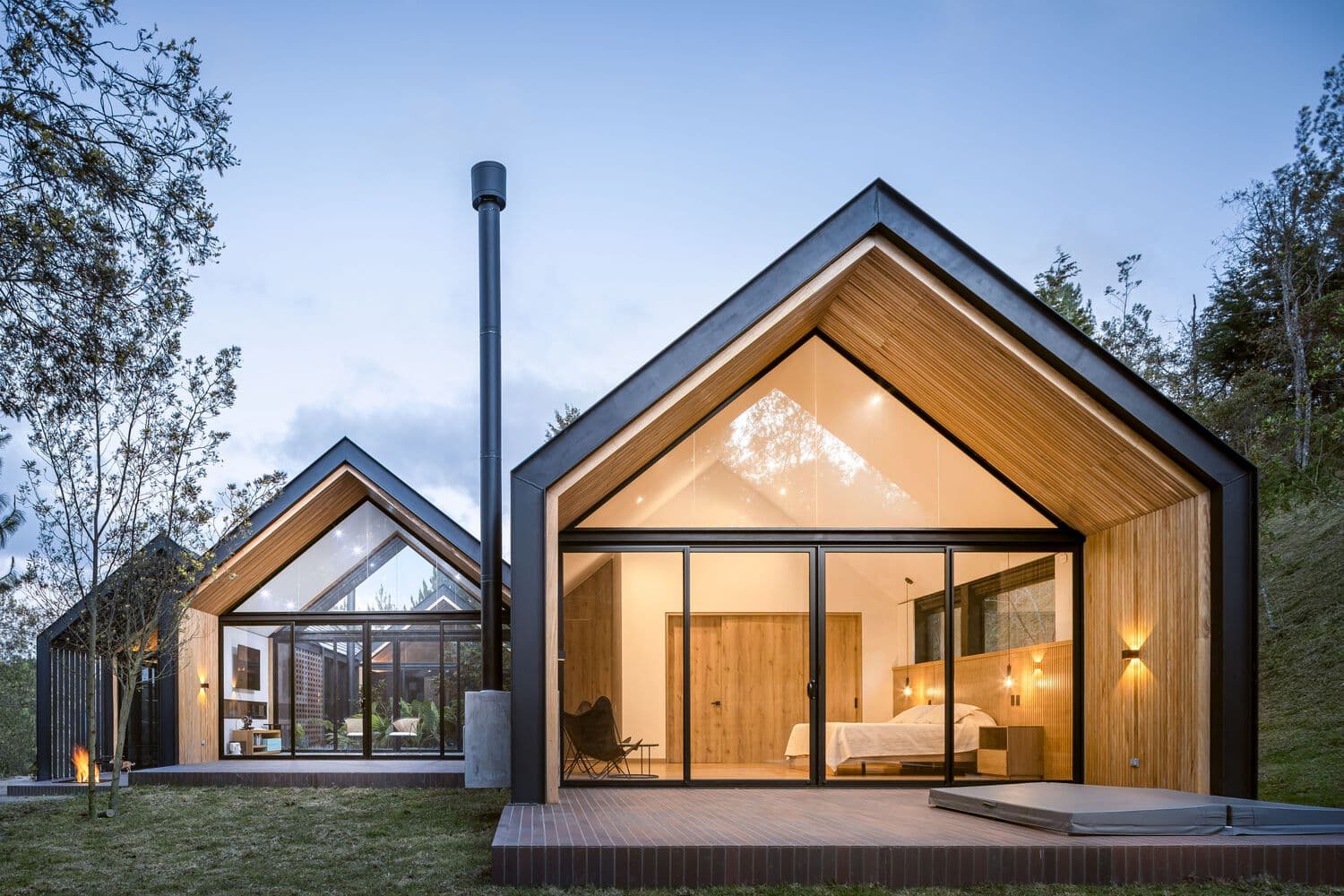
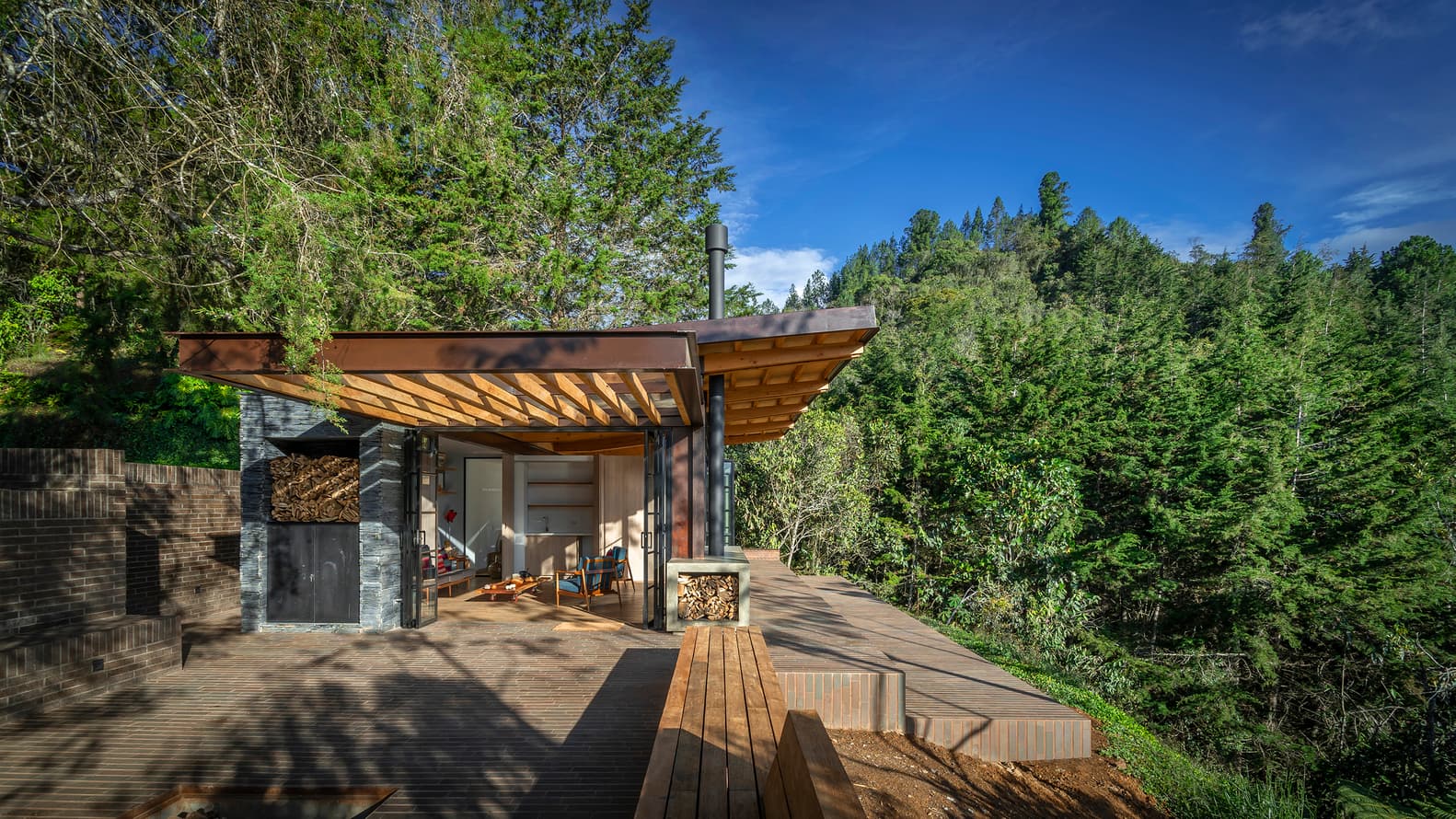
Refugio en la Montaña is a small residential retreat designed by DARP – De Arquitectura y Paisaje as a secondary construction within an existing property located on a hillside in El Retiro, to the east of Medellín. Positioned within a dense native forest and pine landscape, the project is conceived as a quiet and secluded space that enhances the relationship between architecture and its natural surroundings.
The arrival sequence plays a crucial role in shaping the spatial experience. The project is accessed through an esplanade surrounded by vegetation, where the transition into the building begins as a gradual unfolding of atmospheres. Rather than presenting itself immediately, the structure is approached through a subtle descent—a “crack” in the landscape that guides visitors downward through a vegetated path. This journey connects the main platform of the site with a terrace that acts simultaneously as a meeting point, observation deck, circulation element, and connector to the existing house.
The building is intentionally positioned below the level of the main house, taking advantage of the steep slope to preserve uninterrupted views toward the mountains and surrounding forest. This placement also helps detach the structure from the terrain, protecting it from humidity while enhancing privacy. The architectural form is defined as a simple rectangular prism, allowing clarity in both spatial organization and construction logic.
Inside, the space is organized into two primary living areas and two service modules. One module contains a dressing room and bathroom connected to the bedroom, while the second operates as a multifunctional element dividing the interior spaces and integrating storage with a small kitchenette. Large glazed openings allow the interior to expand visually and physically into the surrounding landscape, reinforcing the project’s central idea of continuity between inside and outside.
The roof extends outward into the landscape, further blurring the boundary between architecture and nature. Surrounding gardens are carefully designed to amplify this integration, creating intermediate spaces that gradually dissolve into the native forest. Ultimately, the project responds to a need for expansion while reinterpreting the spirit of the place, offering a refined architectural gesture that prioritizes landscape, experience, and spatial sequence.
The Team2
More from DARP
View studio profile