


Watermill House
 9 photos
About the Project
Residential renovation and addition design defines the architectural approach of Watermill House, a project by Desai Chia Architecture located in Water Mill in the Hamptons region of New York. Completed in 2015, the project expands and transforms a traditional shingled cottage through a contemporary addition that redefines the relationship between the house and its surrounding landscape.
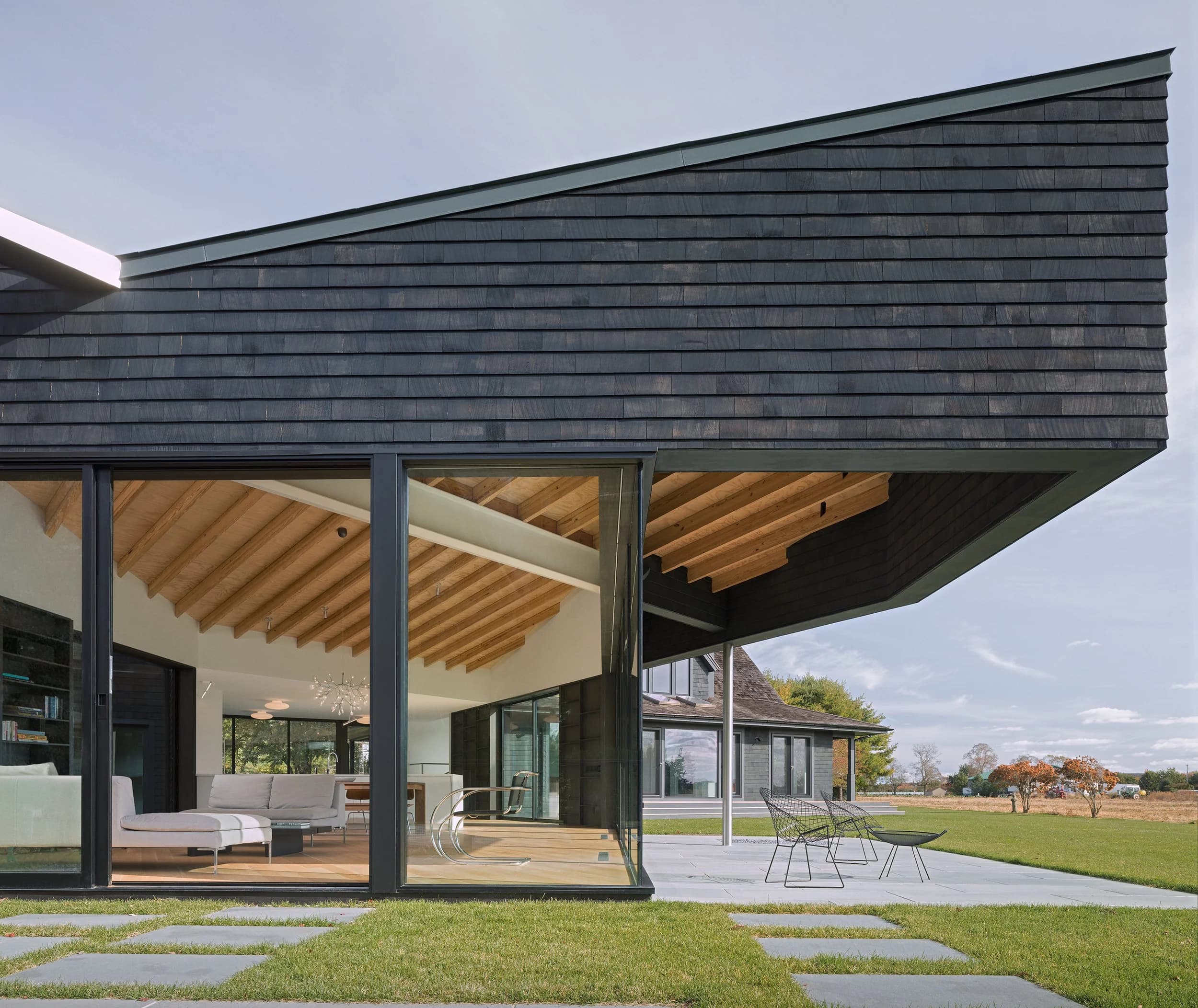
The original structure consisted of a modest cottage typical of the region. Rather than demolish the existing building, the architects chose to preserve its character while introducing a carefully designed addition that accommodates new living spaces. The intervention reorganizes the internal layout so that the main social spaces—living room, dining area, and kitchen—are relocated into the new extension. This shift allows these spaces to connect more directly to the garden, swimming pool, and expansive farmland views beyond the property.
A new primary entrance is positioned within the addition, guiding visitors into the heart of the home where daily activities and gatherings occur. The former cottage footprint was renovated to house more private functions, including a family room, home office, and a guest suite on the ground floor. Upstairs, bedrooms were enlarged and reorganized to create more generous private spaces, complemented by a shared bathroom and a small sitting area oriented toward the surrounding countryside.
Architecturally, the new addition introduces a bold reinterpretation of traditional Hamptons forms. While the exterior references familiar vernacular materials and proportions, the interior expresses a more dynamic spatial experience. The living areas are defined by an undulating vaulted ceiling composed of exposed structural framing, creating a sculptural volume that celebrates the central gathering spaces of the house. This dramatic ceiling element contrasts with the simpler geometry of the original cottage while maintaining a cohesive architectural language.
The renovation also focuses on light, spatial flow, and environmental responsibility. By retaining significant portions of the existing structure and carefully integrating new construction, the project reduced demolition waste and shortened the overall construction timeline. The result is a residence that blends traditional regional architecture with contemporary design strategies, producing a home that feels simultaneously rooted in its landscape and newly expressive in form.
Through its combination of renovation and expansion, Watermill House demonstrates how sensitive architectural interventions can transform an existing home while strengthening connections to landscape, daylight, and everyday living.
The Team5
More from Desai Chia Architecture PC
View studio profile

More projects in United States
View all in United States





More single-family house projects
Used 1 productfrom 1 brand


Used 1 productfrom 1 brand
Single-Family House · Cape Town, South Africa

1 connection