Mixed-Use · Boston, United States

4 connections
 21 photos
Urban public space design plays a key role in revitalizing infrastructure environments that are often overlooked in contemporary cities. The project Underbridge Station · Floating Tangerine, designed by the studio milanesi | paiusco, explores how infrastructure residual spaces beneath bridges can be transformed into active public environments. The intervention proposes a spatial system that integrates architecture, landscape, and urban programming to create a recognizable civic landmark within the urban fabric.
The project reimagines the underbridge area as a dynamic urban node where circulation, social activity, and cultural events intersect. Rather than treating the infrastructure as a barrier, the design frames the bridge as a spatial canopy under which new architectural elements and urban platforms can be inserted. Through carefully placed structures and landscape interventions, the design establishes a flexible environment capable of hosting temporary installations, public gatherings, and community activities.
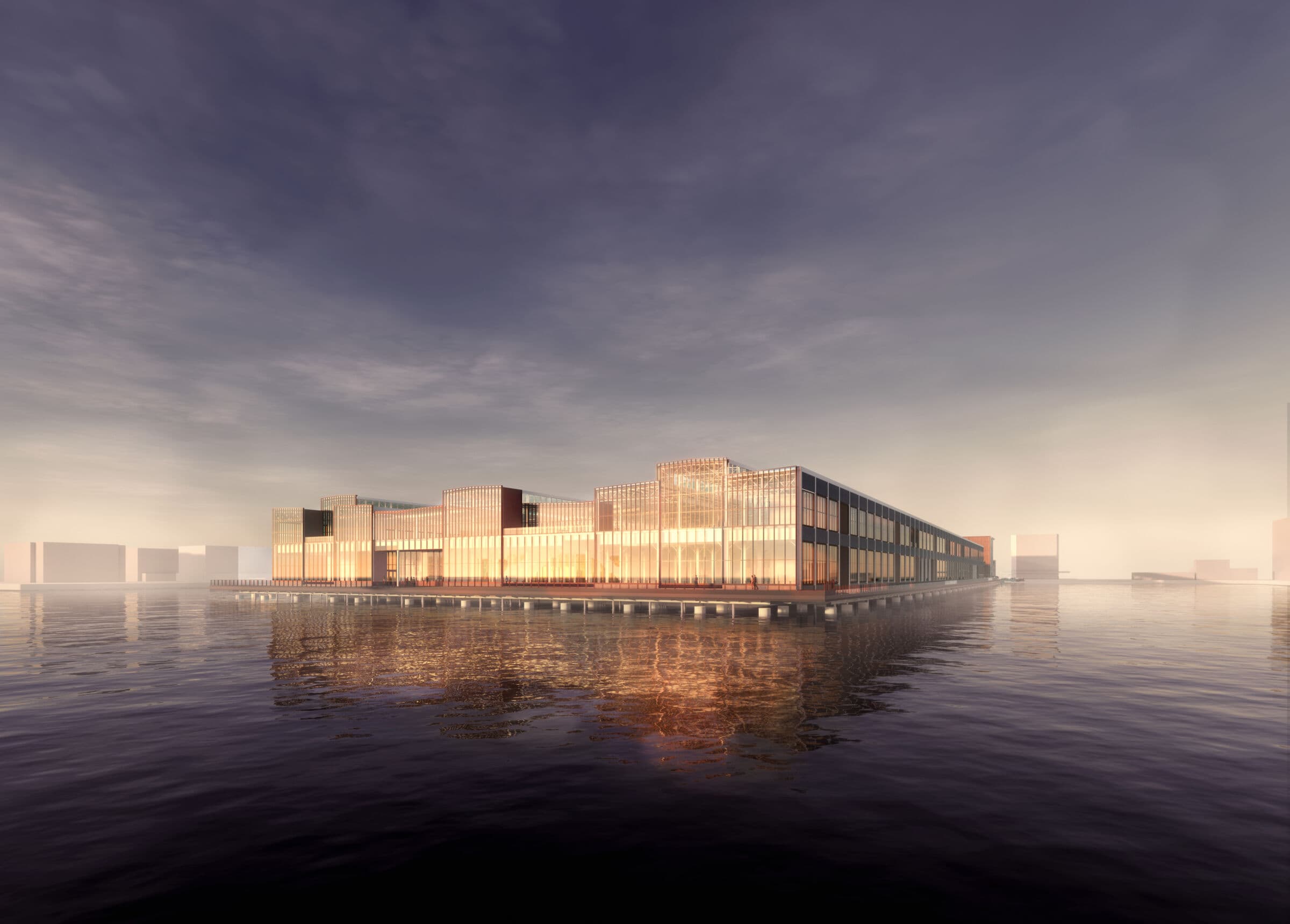
A key design concept is the introduction of an elevated pavilion-like structure—referred to metaphorically as a “floating tangerine”—that becomes the visual focal point of the space. The intervention introduces bold geometric forms and vibrant color elements that contrast with the existing infrastructure, helping to transform an otherwise neglected area into an identifiable destination within the city. The pavilion structure also provides shaded gathering spaces and encourages pedestrian interaction with the surrounding urban environment.
Material strategies emphasize durability and adaptability to outdoor conditions, while the spatial organization prioritizes openness and accessibility. By activating an underutilized infrastructural void, the project demonstrates how architectural design can reframe leftover urban spaces into meaningful public environments that contribute to the cultural and social life of the city.
The project reflects the studio’s broader design approach that combines research, architectural experimentation, and urban strategy to generate spatial systems capable of adapting to evolving urban conditions.
The intervention demonstrates how overlooked infrastructural spaces can be reinterpreted as valuable public environments within dense urban contexts. By introducing a distinctive architectural gesture and flexible gathering areas, the project transforms an underused site into an active civic destination.
Mixed-Use · Boston, United States