


Tiefes Haus
 19 photos
About the Project
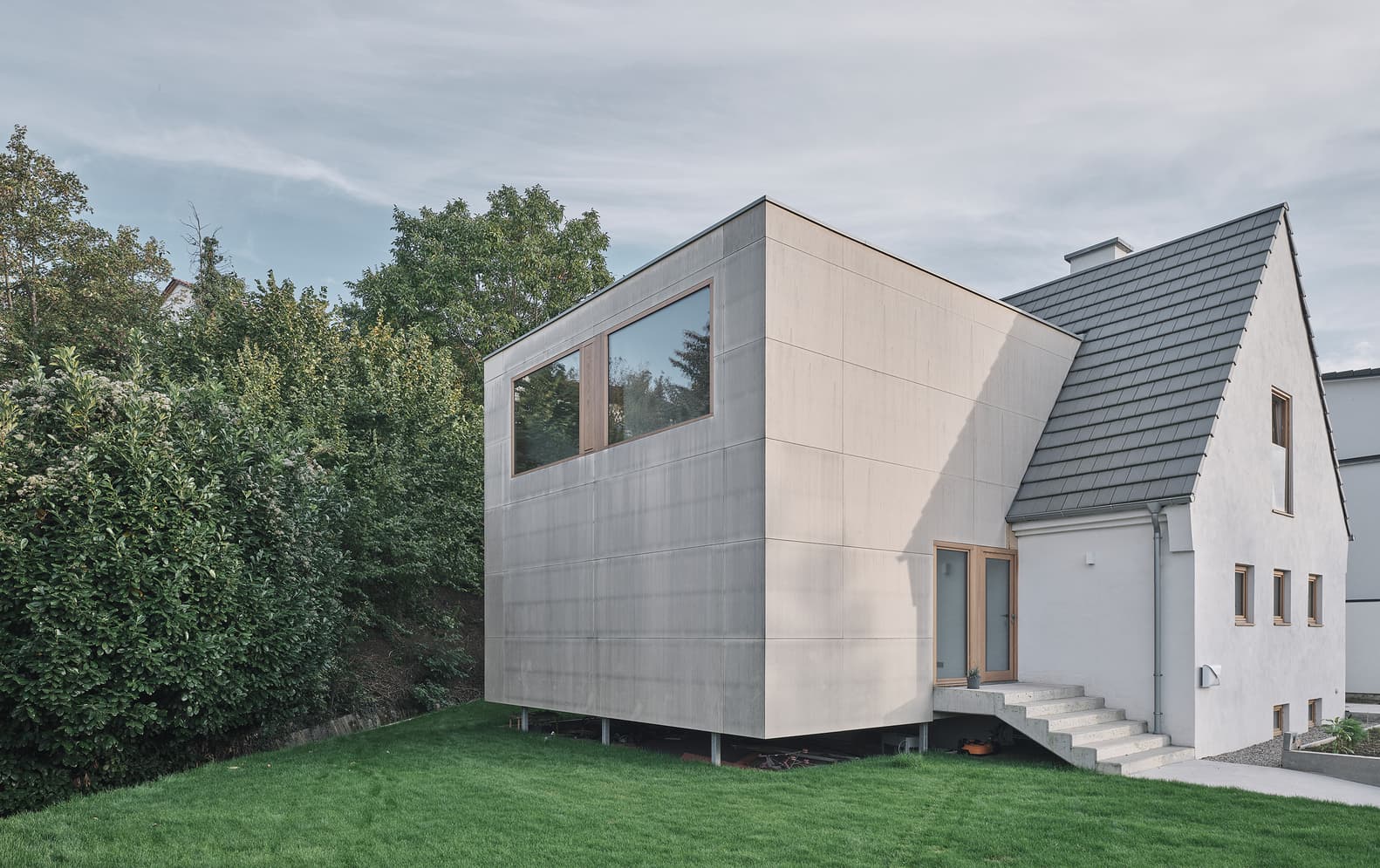
Residential house design often requires adapting to complex site constraints, and Tiefes Haus by HGA Henning Grahn Architektur in collaboration with Marc Flick Architekt BDA demonstrates a precise response to a narrow and elongated plot condition. The project reinterprets an existing residential structure, integrating its walls into a newly defined architectural composition that extends longitudinally across the site.
The central design strategy is based on spatial sequencing through split-level organization. Instead of a traditional flat floor plan, the ground level is articulated through subtle height differences that create distinct zones—ranging from entrance and guest areas to more private living spaces. A two-story gallery acts as the main spatial connector, visually and physically linking the front and rear sections of the house while introducing vertical continuity.
The building is slightly recessed at the ground level to define a clear entrance condition, while internally the plan is divided into two primary zones. The front section accommodates more public functions such as foyer and exhibition-like spaces, while the rear opens toward the garden, hosting the kitchen and living areas. This duality is reinforced by a continuous roof structure that unifies the composition both structurally and visually.
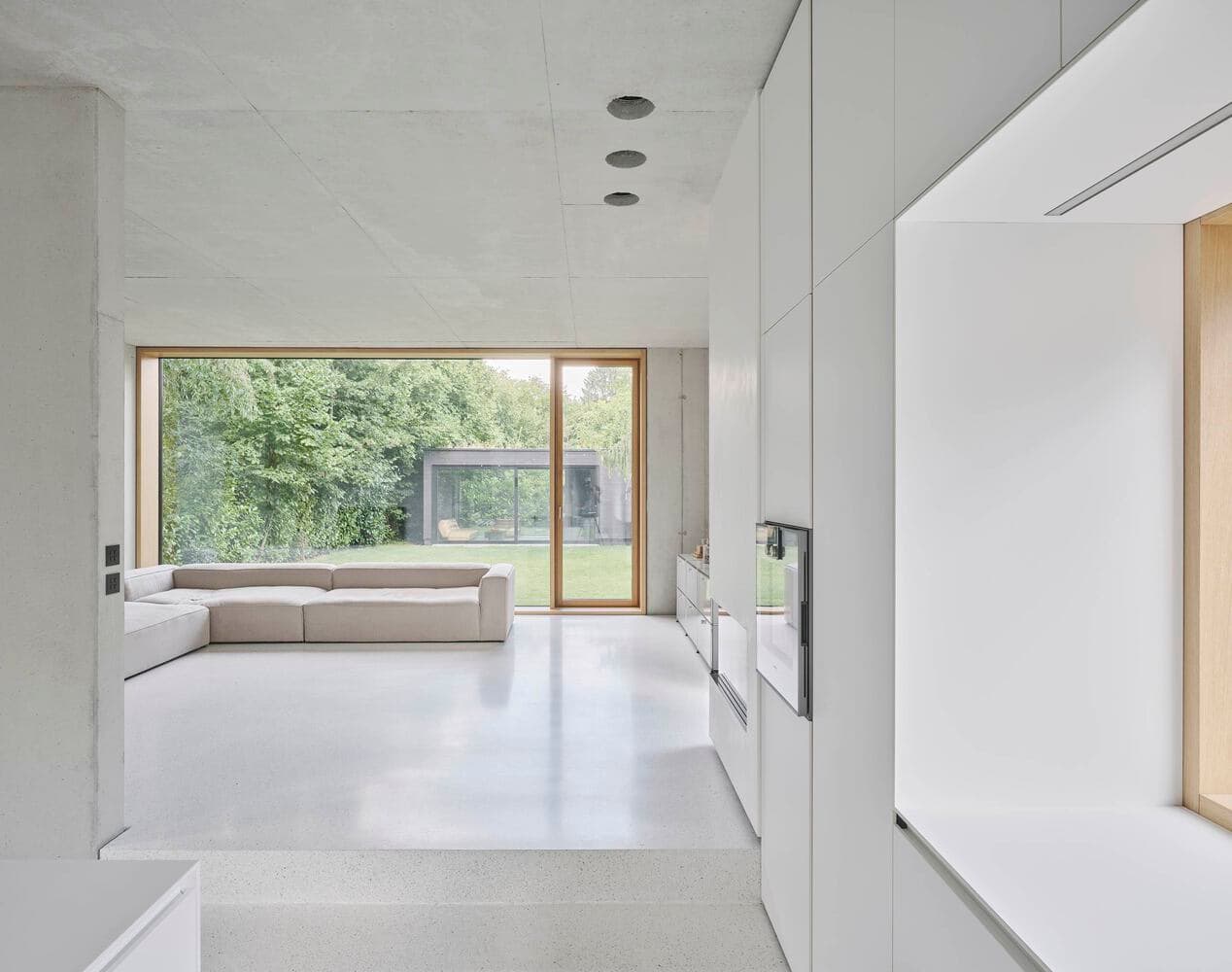
Materiality plays a defining role in the project’s architectural identity. The exterior is wrapped in a homogeneous dark façade, punctuated by carefully positioned openings that appear minimal from the outside but provide rich spatial experiences within. Inside, a contrast emerges between raw concrete surfaces, polished terrazzo flooring, and oak wood elements, creating a balanced dialogue between rough and refined textures.
Large glazed openings are strategically oriented to the north to prevent overheating while maximizing consistent daylight. Floor-to-ceiling windows and interior oak doors further enhance spatial continuity and visual depth. The upper level is divided into private zones, including children's and sleeping areas, connected via a concrete walkway overlooking the central gallery.
Overall, Tiefes Haus represents a highly controlled architectural intervention where spatial layering, material contrast, and contextual sensitivity come together to transform a constrained site into a dynamic and livable environment.
The Team2
More from Henning Grahn Architektur
View studio profile
More residential projects
Used 1 productfrom 1 brand

Used 1 productfrom 1 brand
Single-Family House · Cape Town, South Africa

1 connection