


KZK Housing and Public Spaces
Concept
 4 photos
About the Project
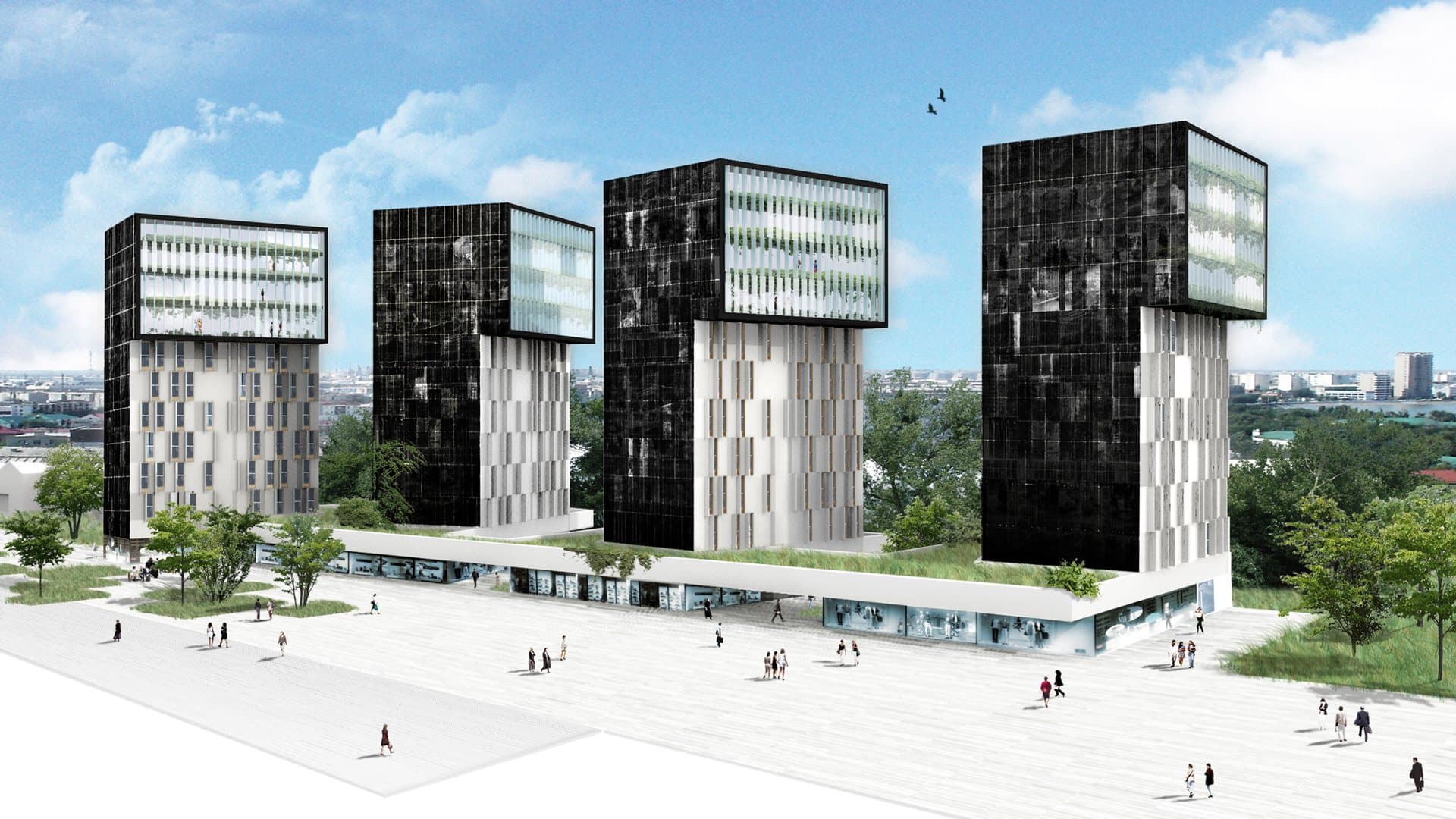
KZK Housing and Public Spaces, designed by GEZA Architettura, is conceived as a large-scale urban intervention that combines residential development with public space design into a unified masterplan. The project operates on two parallel levels: the redefinition of the neighborhood’s identity and the architectural organization of new residential structures in relation to the city.
The masterplan is structured along a strong east–west axis, which becomes the primary ordering element of the entire intervention. This axis connects newly designed buildings with existing and under-construction structures, establishing a cohesive and continuous urban system. Rather than treating architecture and urban space as separate elements, the project integrates them into a single spatial strategy, ensuring harmony between built volumes and open areas.
The residential component is developed in close relationship with public spaces, where landscape plays a central role in defining the quality of living. The project emphasizes the creation of shared environments—courtyards, green areas, and pedestrian connections—that foster interaction between inhabitants while maintaining a strong connection to the urban context.
Architecturally, the intervention is designed to respond to both the scale of the city and the needs of individual residents. Buildings are positioned to create a balanced composition, avoiding dominance while contributing to a unified urban identity. This approach reflects GEZA’s broader design philosophy, where architecture acts as a mediator between private living spaces and collective urban life.
Ultimately, KZK Housing and Public Spaces is not just a residential project but a strategic urban proposal that reimagines the relationship between housing, landscape, and public infrastructure. By aligning architectural form with urban planning principles, the project proposes a model for integrated, human-centered city development. The project proposes a structured urban fabric where residential volumes are carefully arranged around a central green axis, enhancing walkability and spatial clarity. Public spaces act as connectors, linking buildings while encouraging social interaction, environmental continuity, and a balanced relationship between density and openness.
The Team2
More from GEZA Architettura
View studio profile
More housing complex projects
Used 1 productfrom 1 brand

Used 1 productfrom 1 brand
Single-Family House · Cape Town, South Africa

1 connection